Brilliant Outputs, Terrible Questions
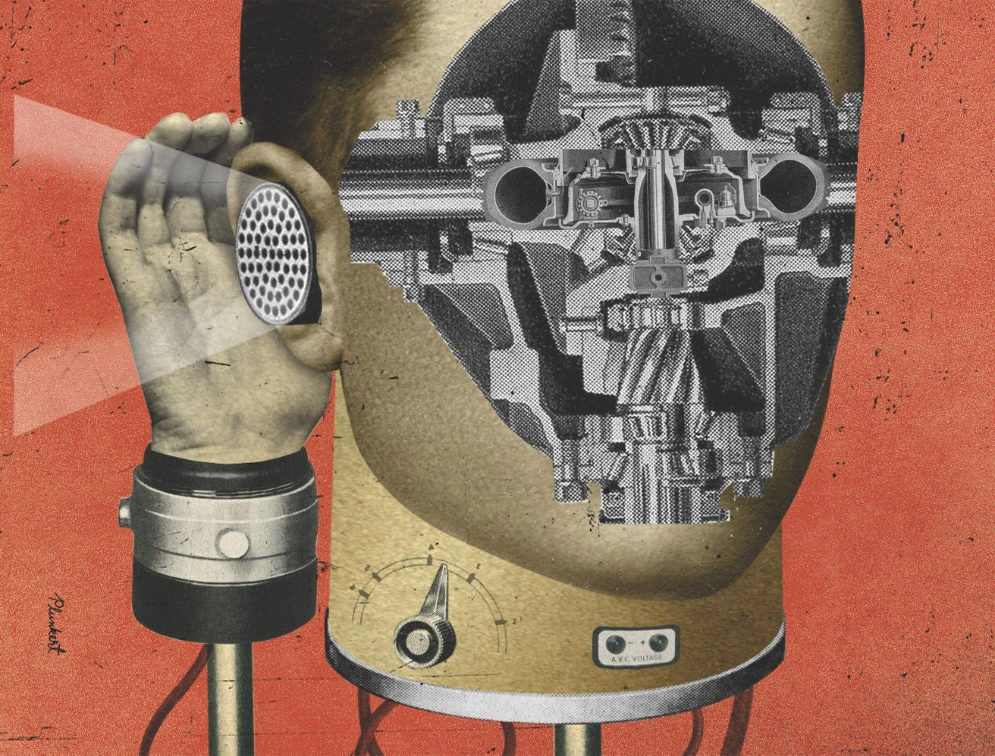
Illustration: © David Plunkert
AI Took the Work. Creative Directors Kept the Job.
The obituary for the creative director has been drafted so many times it’s starting to feel like performance art. Each new wave of technology—desktop publishing, stock photography, digital printing, and now AI—has arrived with the same breathless headline: This is it. The end of taste as a profession. And yet, somehow, creative directors continue to haunt agency boardrooms, wearing expensive sneakers and asking questions that make timelines cry.
The current panic around AI feels different, of course, because this time the machines can actually make things. They can generate logos, campaigns, scripts, and mood boards in the time it takes a human to complain about the brief. Naturally, this leads to the assumption that the person whose job is to “have ideas” is about to be replaced by a server farm with a endless subscription.
This assumption is charmingly naive.
AI is very good at producing answers. Creative directors, on the other hand, are paid—often suspiciously well—to decide which questions are worth asking in the first place. That distinction is not trivial. In fact, it’s the entire game. Give AI a bad prompt and it will enthusiastically produce a masterpiece of irrelevance. Give it a good prompt and it will still need someone to recognize whether the result is brilliant, derivative, or subtly disastrous.
(Enter the creative director, holding a $8 coffee and a deeply inconvenient opinion.)
The uncomfortable truth is that most creative work is not limited by execution but by judgment. The world is already flooded with competent visuals and passable copy. What’s scarce is taste—the ability to say, with confidence and justification, “this is right” and “this is nonsense.” AI can remix the past at scale, but it has no lived experience, no cultural intuition, and absolutely no fear of embarrassing itself in a client meeting. That last one alone guarantees ongoing human employment.
There’s also the small matter of accountability. When a campaign flops, a brand doesn’t call up an algorithm and demand a postmortem. They look for a person. Preferably one with a title, a salary, and a LinkedIn profile that can absorb blame with dignity. Creative directors, for all their mystique, are essentially professional shock absorbers. They translate chaos into decisions and then stand next to those decisions when things get awkward.
And let’s not overlook politics—the true final boss of any creative endeavor. AI does not navigate egos, soothe nervous stakeholders, or decode the subtext of a CEO saying, “Make it pop.” Creative directors do. Poorly, sometimes, but with enough nuance to keep projects moving forward instead of collapsing into a Slack thread of passive-aggressive emojis.
In 5–10 years, the role of the creative director will likely look different. They will spend less time pretending to manually craft every asset and more time orchestrating systems that generate them. They will become curators, editors, and, occasionally, therapists for both clients and machines. But disappear? Hardly.
Because as long as someone, somewhere, needs to decide what’s actually good, the person with the nerve to answer that question will remain stubbornly employed.
Even if the AI writes the pitch deck.